


A Sweet revolution in exploring commercial beekeeping
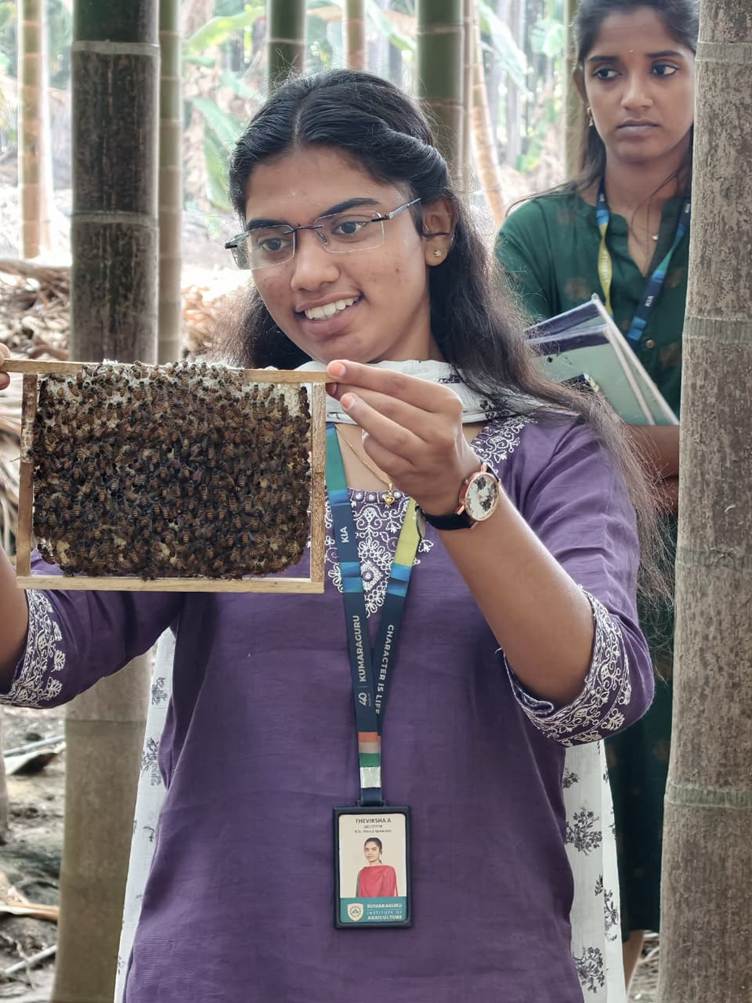
Experiential learning plays a pivotal role in strengthening practical competence in agricultural sciences, particularly in specialized domains such as a Apiculture. The course, AEN 451- Commercial Beekeeping (0+10) provided an intensive hands-on experience in managing honey bee colonies, with a primary focus on the indigenous species Indian honey bee (Apis cerana indica). This species, well adapted to the Indian agro-climatic conditions, exhibits efficient foraging behaviour and suitability for small and medium scale beekeeping enterprises. The course facilitated a deeper understanding of colony dynamics, hive management, and value addition in bee products viz. honey, wax and pollen.
A fundamental component of the course involved scientific hive handling and colony inspection techniques. Regular inspection of hives enabled us to study comb architecture, brood distribution, and food storage patterns. The comb, constructed from beeswax secreted by worker bees from their wax glands is organized into hexagonal cells that serve multiple functions including brood rearing, pollen storage, and honey deposition. By carefully examining the brood pattern, particularly the presence of careful and uniform brood cells, we could assess the reproductive efficiency of the queen and the overall colony health.
The population structure within the colony is a crucial determinant of productivity. In a healthy bee colony, a higher proportion of worker bees (Sterile females) relative to drones (male bees) is essential. Worker bees perform critical tasks such as foraging, nursing, comb building, and will maintain the temperature of the colony. In contrast, drones primarily function in mating and do not contribute to resource collection. An increased drone population can lead to resource depletion and reduced colony efficiency, making population monitoring a key management practice. Through field observations, we developed the ability to identify caste differentiation and evaluate colony strength based on population dynamics.
Seasonal fluctuations significantly influence bee activity, particularly during the dearth period, characterized by reduced availability of nectar and pollen sources. During such periods, colonies experience nutritional stress, which can lead to decreased brood rearing and population decline. To mitigate this, we practiced supplementary feeding using sugar syrup (sucrose solution), which acts as an immediate carbohydrate source. This intervention helps sustain metabolic activity and maintain colony stability until floral resources are restored. The preparation and timely administration of sugar syrup(1:1 ratio) were critical in preventing colony collapse under resource scarce conditions.
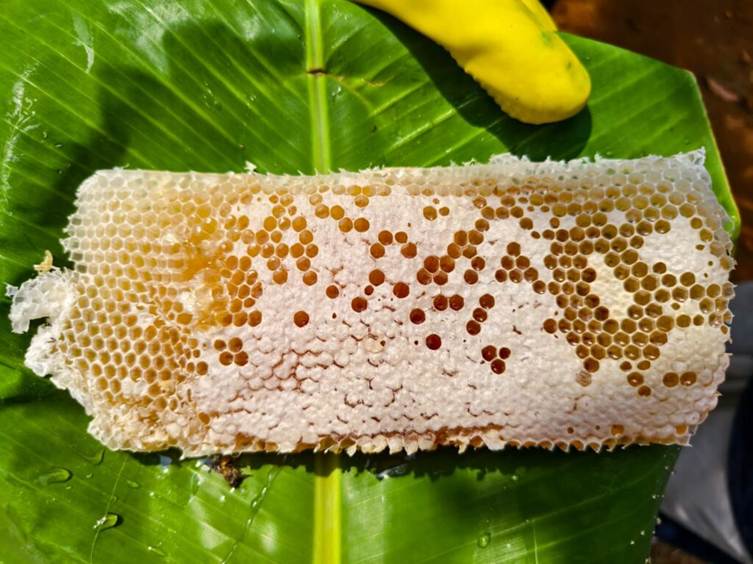
An important practical skill acquired during the course was the capture and domestication of feral colonies from natural habitats such as tree branches. This process involved careful transfer of the colony, including the queen and brood, into managed hives. Such practices not only increase colony numbers but also preserve locally adapted genetic strains of bees. It emphasized the ecological significance of integrating bee populations into organized apiculture systems.
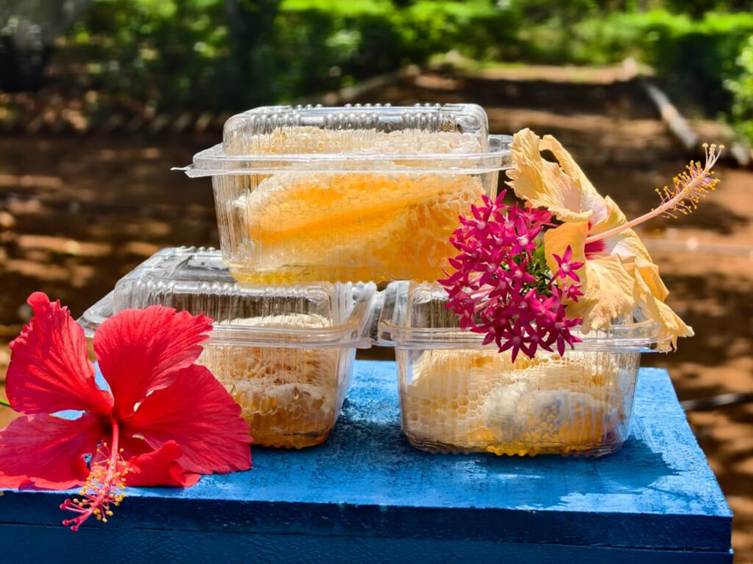
Honey extraction using a honey extractor, which ensures efficient removal of honey without damaging the comb structure. This method supports sustainable beekeeping by allowing the reuse of combs, thereby conserving the energy expenditure of bees in wax production. Additionally, we explored different product forms such as raw honey and comb honey, both of which have high market demand due to their minimal processing and retention of natural bioactive compounds. These products contribute significantly to the economic viability of commercial beekeeping.
A detailed understanding of the Marthandam hive system was another key learning outcome. This hive design, suitable for Indian bees, consists of several functional components including the brood chamber, where egg laying and larval development occur; the super chamber, designated for honey storage; the bottom board, which provides structural support; the top cover, offering protection from environmental factors; and the movable frames, which facilitate inspection and management. It was emphasized that maintaining a minimum of six well-occupied frames in the brood chamber is essential to support adequate brood rearing and colony expansion.
Field visits to apiaries such as Uzhavan Then Kudil and ADP Apiary exposed us to advanced and innovative beekeeping techniques. One notable practice was the use of natural comb sections from inaccessible areas as starter foundations, allowing bees to extend and construct combs based on their innate behavior. Furthermore, we observed the strategic placement of foundation in the super chamber from the bottom edge of super frame, which encourages bees to access the frame efficiently and deposit honey. These techniques highlighted the importance of aligning management practices with the natural instincts of honey bees rather than relying exclusively on artificial foundation sheets.
Another significant scientific insight was the role of the queen bee in colony productivity. A healthy, fertile queen ensures consistent egg laying and maintains colony cohesion through the release of pheromones. The introduction of a vigorous queen into a colony enhances brood production, worker population, and ultimately honey yield. This emphasized the importance of queen quality assessment and replacement strategies in commercial beekeeping.
The course also broadened our knowledge of value-added bee products. Bee venom, containing biologically active compounds such as melittin, is utilized in apitherapy for its anti-inflammatory and therapeutic properties. Similarly, royal jelly, a glandular secretion from worker bees fed to queen larvae, is rich in proteins, lipids, and vitamins, making it a high-value nutraceutical product. Understanding the extraction and application of these products revealed the diverse economic potential of apiculture beyond honey production.
Overall, the experiential learning gained through AEN 451 has significantly enhanced our technical knowledge and practical skills in commercial beekeeping. Handling bees under hives enabled us to understand colony behaviour, seasonal management, and product diversification in a scientifically informed manner. This course not only prepared us for professional engagement in apiculture but also instilled a deep respect for honey bees as vital pollinators and ecological contributors.
Written by,
Theviksha A
IV Year Student (2022 Batch)
