𝗘𝘅𝗽𝗹𝗼𝗿𝗲𝗱 𝗠𝗼𝗱𝗲𝗿𝗻 𝗗𝗮𝗶𝗿𝘆 𝗜𝗻𝗻𝗼𝘃𝗮𝘁𝗶𝗼𝗻 𝗮𝘁 𝗠𝗶𝗹𝗸𝘆 𝗠𝗶𝘀𝘁
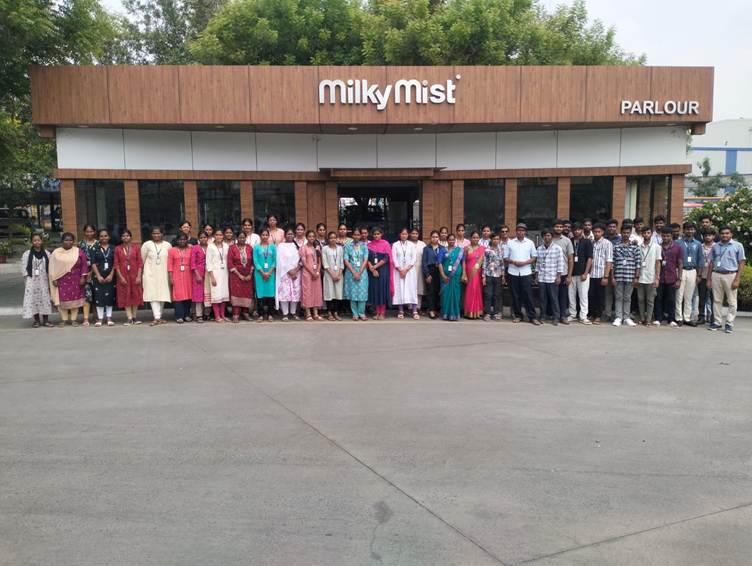
The visit to Milky Mist Dairy Food Limited, Perundurai, provided a comprehensive understanding of modern dairy technology, industrial processing systems, and value addition in milk. The fully automated plant, recognized as one of the leading dairy units in Asia, provided a clear understanding of large-scale production systems and modern food technology. From a student’s perspective, this experience helped bridge the gap between theoretical classroom concepts and real-time industrial practices, making learning more practical and impactful.
The plant operates through three major production units, each designed for specific processing functions. In the first unit, core dairy products such as ghee, curd, and paneer are manufactured. The process involves acid coagulation for paneer, followed by whey separation, where the liquid whey is further processed using spray drying technology to produce whey powder, reflecting efficient by-product utilization. This gave students insight into sustainable practices and how industries convert waste into valuable products, reinforcing the importance of resource efficiency.
The second unit focuses on value-added dairy products including ice cream, milkshakes. mozzarella, and cheddar cheese. These products involve complex processes such as homogenization, emulsification, fermentation kinetics, and controlled ripening to achieve desired texture, flavor, and consistency. Observing these processes helped students understand how multiple scientific principles especially dairy microbiology and food engineering-work together in real-world production.
The third unit highlights diversification into fruit-based products and traditional dairy sweets like gulab jamun, indicating integration of dairy technology with food processing systems. This exposure encouraged students to think about innovation and product diversification as key strategies for business growth in the dairy sector.
Raw milk procurement and quality assessment form the foundation of production. Milk collected from various regions undergoes rigorous quality analysis based on parameters such as SNF (Solids-Not-Fat), fat percentage, and total solids. Witnessing these quality control procedures enhanced students’ understanding of food safety standards and the importance of maintaining consistency in large-scale production. Advanced methods like ultra-high temperature (UHT) processing are used for extended shelf-life beverages, enabling storage for several months without spoilage, which highlighted the role of advanced technology in ensuring product stability.
The facility emphasizes high standards of sanitation and operational efficiency through Clean-In-Place (CIP) systems, which allow automated cleaning of pipelines and equipment without dismantling. Controlled environmental conditions, including regulated temperature and humidity, play a critical role in maintaining product stability and preventing contamination. This gave students a deeper appreciation of hygiene management and precision required in food industries.
A key distinguishing factor is the focus on value addition rather than direct liquid milk sales. By converting milk into high-margin products such as cheese, paneer, and desserts, the company enhances profitability and market competitiveness. In addition, the adoption of Direct-to-Consumer (D2C) distribution models, supported by modern retail and digital platforms, strengthens market reach and consumer accessibility. These aspects provided students with insights into business strategies, marketing approaches, and the importance of value-added production in today’s competitive market.
Overall, the visit provided valuable insights into the application of dairy microbiology, food engineering, and industrial automation in modern dairy processing. It clearly demonstrated how technological innovation, quality control, and efficient supply chain management contribute to the success of a large-scale dairy enterprise. From a student’s point of view, the experience was highly enriching, improving practical knowledge, encouraging skill development, and creating awareness about diverse career opportunities in the dairy and food processing industries.
” 𝗪𝗵𝗲𝗿𝗲 𝘁𝗲𝗰𝗵𝗻𝗼𝗹𝗼𝗴𝘆 𝗺𝗲𝗲𝘁𝘀 𝘁𝗿𝗮𝗱𝗶𝘁𝗶𝗼𝗻, 𝗲𝘃𝗲𝗿𝘆 𝗱𝗿𝗼𝗽 𝗼𝗳 𝗺𝗶𝗹𝗸 𝗯𝗲𝗰𝗼𝗺𝗲𝘀 𝗮 𝘀𝘆𝗺𝗯𝗼𝗹 𝗼𝗳 𝗾𝘂𝗮𝗹𝗶𝘁𝘆,𝗶𝗻𝗻𝗼𝘃𝗮𝘁𝗶𝗼𝗻 𝗮𝗻𝗱 𝘁𝗿𝘂𝘀𝘁.”
Written by,
V.D. Harshini
II Year Student (2024 Batch)